
Data
.png?width=48&height=48&name=Conrad%20Face%201%20(1).png)
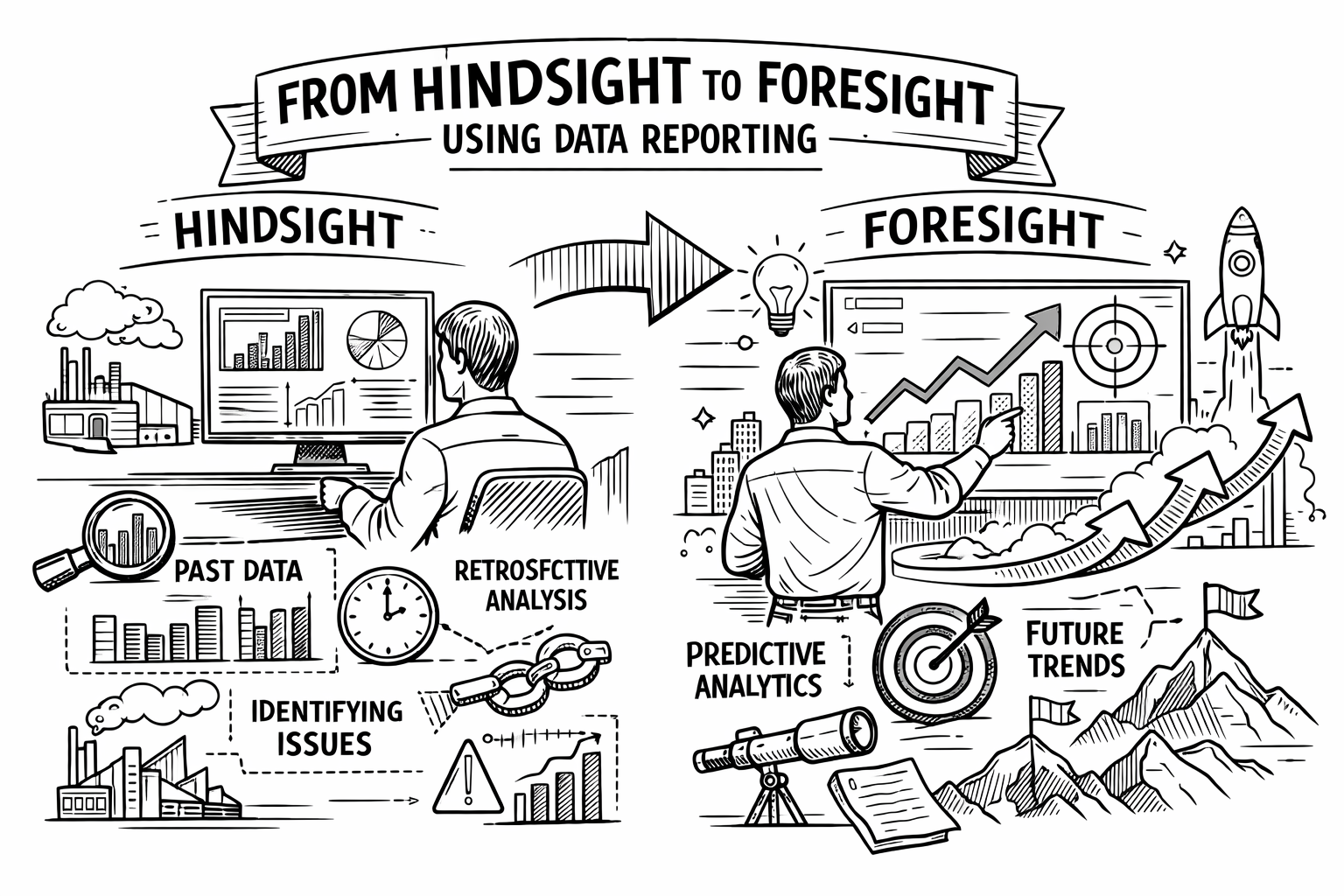
Restaurants have never had more data, and yet most teams still run the business in hindsight.
Every week looks something like this:
That’s not a leadership problem. It’s a data problem.
Hindsight is what happens when your data arrives late, lives in silos, and requires a human to translate it. Foresight is what happens when your data is unified, cleaned, modeled, and turned into signals your team can act on before the shift gets away from you.
That’s the promise of end-to-end data intelligence, and it’s exactly what OpSage by CONVX was built to deliver.
Most restaurant groups already have dashboards. Many have multiple.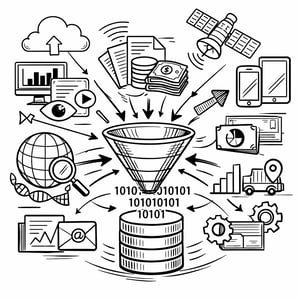
The issue isn’t a lack of charts. The issue is that the underlying data is often:
So teams end up debating the numbers instead of acting on them.
Foresight requires a different foundation: a data engine that’s built for restaurant operations, not a generic BI stack duct-taped together.
End-to-end data intelligence is not one feature. It’s a full chain, from raw inputs to decision-ready outputs.
Here’s what has to happen, reliably, every day:
POS is just the start. Real operational insight requires connecting the full footprint:
sales, labor, inventory, purchasing, third-party delivery, catering, loyalty, guest feedback, and more.
Raw restaurant data is messy by nature. Locations aren’t perfectly consistent. Items get renamed. Discounts are applied differently. Roles and job codes vary. Vendors change formats.
If you skip cleaning, everything downstream breaks.
You need restaurant-specific logic that understands:
This is the leap from analytics to intelligence.
Signals are the “why this matters” layer: what changed, what’s driving it, and what you should do next.
Not everyone wants to log into a BI tool and build views.
Leaders need a simple interface where they can ask:
“What’s happening, where, why, and what should we do about it?”
That’s the end-to-end chain. And it’s why so many restaurant teams feel stuck in hindsight. They’ve only implemented pieces of it.
When end-to-end intelligence is in place, the questions operators ask change.
Instead of:
You start asking:
That’s foresight. And it shows up in very practical, very operational ways.
Hindsight: “Why did labor spike yesterday?”
Foresight: “This location is trending toward overtime by Thursday due to current scheduling and sales pace. Here are two fixes that protect service.”
Hindsight: “Why is food cost up 120 bps this period?”
Foresight: “Chicken usage per entrée is rising at three stores and correlates with a new prep lead + portion variance. If uncorrected, margin impact will compound all month.”
Hindsight: “Delivery is growing but margins feel worse.”
Foresight: “Delivery demand is rising in two trade areas, but order composition is shifting toward low-margin items and high-modifier labor load. Adjust bundling and menu placement to protect contribution.”
Hindsight: “Our Google ratings dropped this month.”
Foresight: “Guest feedback is clustering around late orders and missing items at specific dayparts. Here’s where throughput is breaking and which operational levers resolve it.”
To get foresight, restaurants need an underlying system that behaves like an engine room:
This is where CONVX comes in.
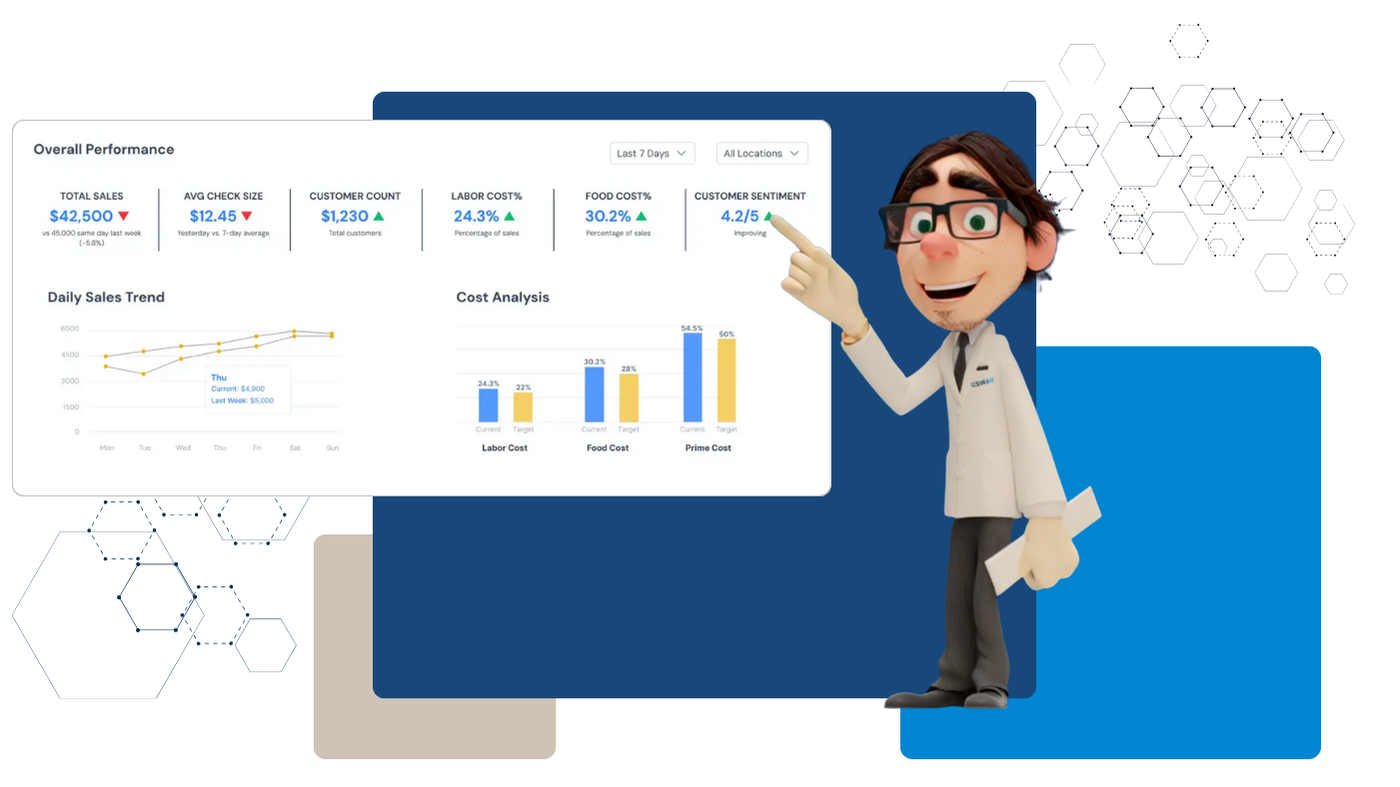
CONVX provides the Restaurant Data Platform (RDP) that powers end-to-end intelligence behind the scenes, and OpSage is the interface that operators actually use to explore performance, monitor trends, and ask questions without needing a data team.
 OpSage helps operators move faster by turning complex data into clear operational intelligence.
That means:
The result is less time diagnosing the past, and more time steering what happens next.
Foresight isn’t just about being “data-driven.” It’s about reclaiming time.
Restaurants that win in the next era will not be the ones with the fanciest dashboards.
They’ll be the ones that can:
That’s the advantage of end-to-end intelligence: it compresses the gap between signal → decision → action.
If you want to begin the shift, don’t start by asking for 50 reports.
Start with one operational question your team asks constantly, like:
Then make that workflow repeatable with clean data and consistent logic.
That’s how you stop managing the restaurant through the rearview mirror.
If you’re tired of hindsight management and you want to run your operation with earlier signals and clearer decisions, OpSage by CONVX is built for that exact shift.
Request a demo and we’ll show you what end-to-end data intelligence looks like when it’s designed for real restaurant operators, not analysts.