Operations

.png?width=48&height=48&name=Conrad%20Face%201%20(1).png)
Most restaurants don’t have a data problem.
They have a dirty data problem.
Every day, restaurants generate massive volumes of information across POS systems, labor tools, inventory platforms, and digital ordering channels. But raw data on its own doesn’t create clarity. In fact, without proper cleaning, it often does the opposite.
That’s why data cleaning sits at the core of the CONVX platform. It’s the foundation that turns disconnected numbers into insights operators can trust to reduce food waste, optimize labor, and run smarter restaurants.
In a restaurant environment, this includes:
Standardizing menu items, categories, and modifiers across locations
Normalizing labor roles, shifts, and timestamps
Reconciling inconsistent or missing records
Aligning sales, labor, and operational data into a shared structure
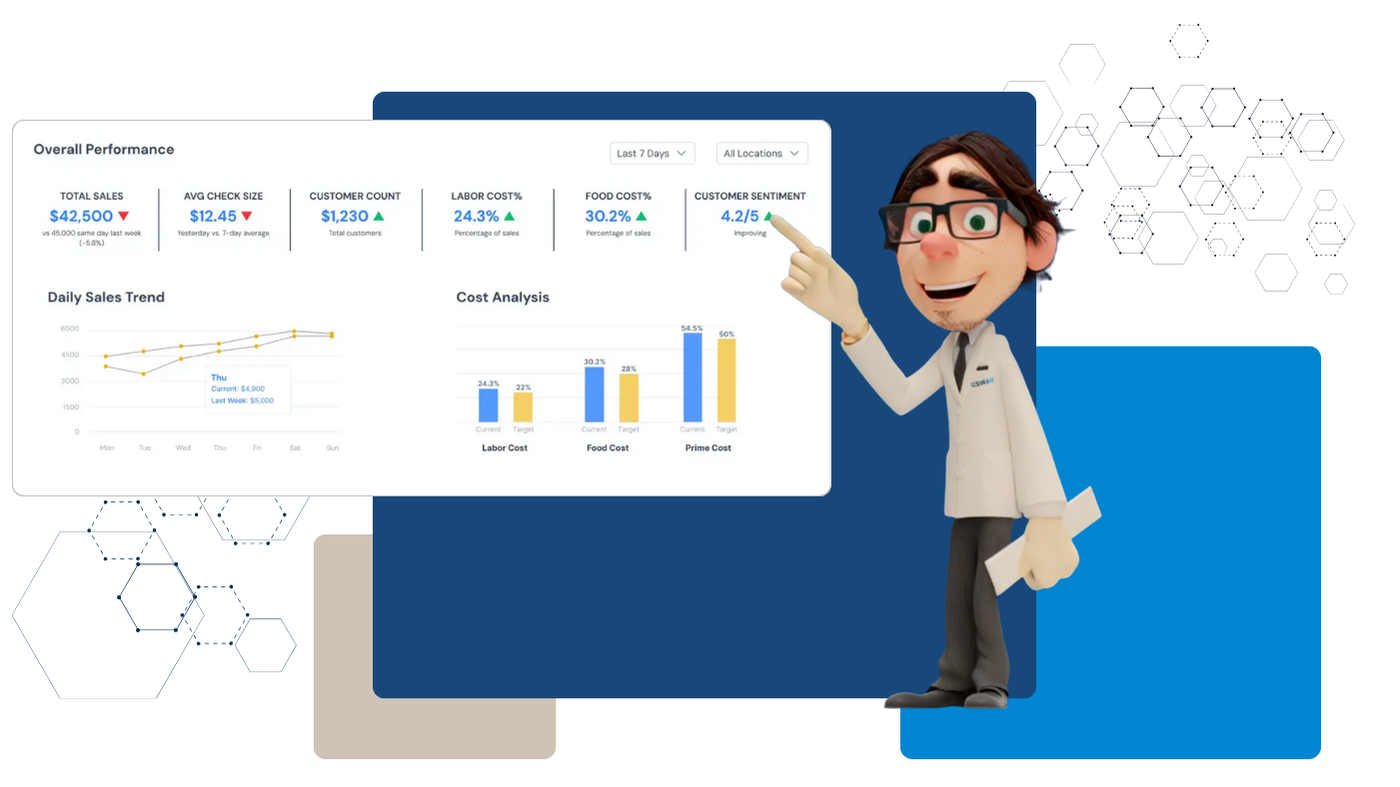
Without this step, dashboards may look impressive, but the insights behind them are unreliable.
Professionally cleaned data ensures that comparisons are valid, trends are real, and decisions are grounded in reality.
 Why Dirty Data Costs Restaurants Money
When your data is dirty, your reports are essentially guesses. If your Spicy Tuna Bowl is logged as S-Tuna in one city and Tuna Bowl (LTO) in another, your POS system sees two different items. That fragmentation creates major barriers to:
You can’t predict inventory needs if you don’t know true demand for a single dish.
Comparing menu performance or labor efficiency across regions becomes apples to oranges.
Tools like OpSage can’t deliver root-cause analysis if the underlying data is unmapped and inconsistent.
Food waste hides inside inconsistent item and inventory data, labor inefficiencies get masked by misaligned schedules and demand signals, top performers blend in with average locations, and teams lose confidence in analytics. Over time, dirty data erodes trust, slows decision-making, and leaves real savings on the table.
CONVX pulls data from POS, labor, inventory, and digital ordering platforms, each with its own formats and quirks.
Data is mapped into a unified restaurant data model so locations, roles, menu items, and time periods align cleanly across the organization.
CONVX uses AI-assisted mapping to accelerate this process, which we’ll explore in a future post.
Outliers, gaps, and anomalies are flagged and corrected so bad data doesn’t quietly distort performance insights.
Once cleaned, data becomes usable across performance benchmarking, food cost analysis, and labor optimization. This is the layer operators rely on to take action.
With clean, aligned data, operators can:
Identify menu items driving waste or margin erosion
Spot prep inconsistencies across locations
Understand modifier impact on profitability
Match production more accurately to demand
Clean data turns food cost management into a proactive discipline, not a reactive scramble.
 How Clean Data Optimizes Labor
Clean labor data allows restaurant teams to:
Align staffing levels with real demand patterns
Compare productivity fairly across locations and shifts
Reduce overtime caused by reactive scheduling
Identify where labor dollars are actually driving results
Instead of guessing, operators gain confidence in every labor decision.
Why This Matters Now
Clean data is no longer a nice-to-have. As food costs rise, labor remains tight, and operators are asked to do more with less, trusted data becomes a competitive advantage. Restaurants that invest in data cleaning first are the ones positioned to actually benefit from analytics, automation, and AI.
POS data is transactional, not analytical. Transactions are incomplete by design until validated, normalized, and aggregated.
Menus change. Roles evolve. Systems update. Data cleaning must be continuous to stay accurate.
Dashboards only visualize what they’re given. If the data is wrong, the insight is wrong.
The opposite is true. Clean data accelerates decisions because teams trust what they see.
 Why Restaurants Trust Us:
Many platforms talk about AI and insights. Few invest deeply in the operational groundwork that makes insights usable.
CONVX treats data cleaning as a core capability, not a side feature. By handling complexity behind the scenes, the platform gives restaurant teams something rare in analytics: confidence.
And that’s what CONVX is built to deliver. Request a CONVX demo and see what clean restaurant data actually looks like in action.